
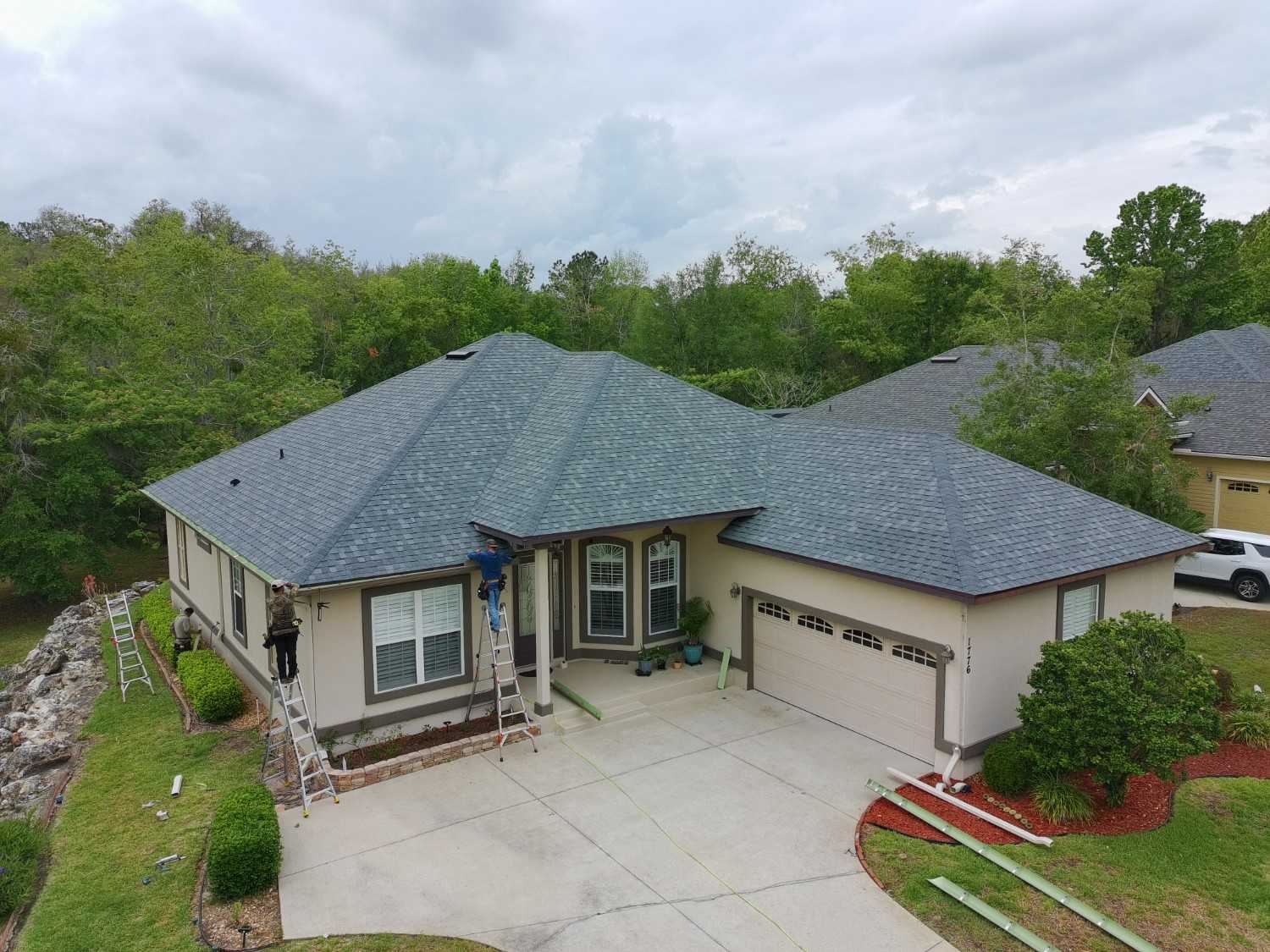
Roofing materials that work fine in most of the country get tested a lot harder in Palm Coast. Between hurricane season, intense UV exposure, high humidity, and salt air working on everything year-round, the best roofing materials Florida homes actually need have to hold up to all of it at once, not just look good on install day. Here’s how the best roofing materials for Florida, asphalt, metal, tile, and flat roofing, each stack up.
Table of Contents:
- What Your Roof Needs In Florida’s Climate
- Asphalt Shingles
- Standing Seam Metal Roofing
- Concrete and Clay Tile
- Flat and Low-Slope Roofing (TPO and Modified Bitumen)
- So Which Material Is Actually Best?
- Get the Right Material for Your Palm Coast Home
What Your Roof Needs In Florida’s Climate
Before comparing materials, it helps to know what they’re up against. The Florida Building Code requires roofing materials in coastal areas like Flagler County to meet design wind speeds in the 140-150 mph range, well above what most of the country requires. On top of wind, materials need to resist UV degradation, handle near-constant humidity without trapping moisture, and stand up to salt air corrosion if you’re anywhere near the coast.
A material that handles one of these well but fails at another isn’t really a good Florida roof. It just looks good in a brochure.
Asphalt Shingles
Architectural asphalt shingles remain the most common roofing material in Florida, and for good reason. Impact-rated (Class 4) shingles from major manufacturers typically carry wind ratings around 130 mph and last 20 to 25 years when installed with proper underlayment and ventilation. They’re also the most budget-friendly option upfront, which makes them the practical choice for a large share of Palm Coast homes.
The catch is that quality matters more here than with any other material. Builder-grade 3-tab shingles are still legal in some cases but perform noticeably worse in Florida’s climate than upgraded architectural shingles with enhanced nailing patterns. Skimping on underlayment is the most common way an asphalt roof underperforms its expected lifespan.
Standing Seam Metal Roofing
Standing seam metal is increasingly the top choice for Florida homeowners planning to stay put for decades. Properly installed systems carry wind ratings exceeding 140 mph, with some rated well past 160 mph, and typically last 50 to 70 years, several times longer than asphalt.
Metal’s concealed fastener system eliminates the most common failure point of older screw-down metal roofing, and its reflective surface helps cut cooling costs, a real advantage given Florida’s relentless sun. The tradeoff is upfront cost, which runs higher than asphalt, but the total cost over a 30-year period often comes out ahead once you factor in replacing an asphalt roof once or twice in that same span.
Concrete and Clay Tile
Tile roofing carries a distinctly Florida look, and it earns that reputation with real performance. Concrete tile typically carries wind ratings around 150 mph and lasts 40 to 50 years, while clay tile can last 50 years or considerably longer, often the longest-lived option on this list. Both resist UV and heat exceptionally well.
The tradeoff is weight. Tile is significantly heavier than asphalt or metal, which means it needs a roof structure designed or reinforced to support it. Tile can also be more expensive to repair after storm damage, since individual tiles can crack on impact even when the overall system holds up structurally.
Flat and Low-Slope Roofing (TPO and Modified Bitumen)
Not every Florida roof is a traditional pitched design. Additions, garages, and some architectural styles use flat or low-slope sections that need a different approach entirely. TPO (a single-ply membrane) and modified bitumen are the two most common systems for these applications, typically rated for wind resistance up to around 120 mph.
These systems are built specifically to shed Florida’s heavy rainfall on a low-slope surface, and modern TPO in particular offers strong UV and heat reflectivity, which matters on sections of roof that don’t have the pitch to shed sun exposure the way a traditional roof does.
So Which Material Is Actually Best?
There’s no single answer that fits every Palm Coast home, since the right choice depends on your budget, how long you’re planning to stay, and your roof’s structure. For most homeowners prioritizing upfront cost, quality architectural asphalt shingles remain the practical, reliable choice. For homeowners planning to stay long-term, standing seam metal typically offers the best total value despite the higher initial investment. Tile suits homeowners prioritizing longevity and the classic Florida aesthetic, provided the roof structure can support it. And flat or low-slope sections need TPO or modified bitumen regardless of what material covers the rest of the home.
Get the Right Material for Your Palm Coast Home
Storm Shield Exteriors installs all four of these systems, which means our recommendation is based on what actually fits your home and budget, not just what we happen to sell. We’ll walk your roof, talk through your priorities, and help you land on the material that makes the most sense for your situation.
Get a free roofing consultation from Storm Shield Exteriors →