
In Palm Coast, hurricane season is six months of real risk from June through November. And when a storm moves through Flagler County, what you do in the days immediately after can determine whether your insurance claim pays out fully, partially, or not at all. The damage is bad enough on its own. Walking away with less than you’re entitled to makes it worse. So here’s exactly what to do after a tropical storm or hurricane damages your roof so you can maximize your settlement.
Step 1: Stay Safe. Absolutely No Roof Access After a Storm
Don’t get on your roof. A wet roof after a hurricane is dangerous for obvious reasons — but there’s another one worth knowing: amateur access to a damaged roof can create additional damage that complicates your insurance claim. Insurers look for evidence of post-storm human-caused damage, and footprints or dislodged materials from a DIY inspection can muddy the picture.
Everything you need to document right now can be done from the ground.
Step 2: Document Before You Touch Anything
The first 24–48 hours of documentation are the foundation of your insurance claim. Photos and video taken immediately after the storm — before any cleanup, temporary repairs, or anything is moved — carry the most weight with your insurer.
What to photograph and video from the ground:
- Missing, lifted, or visibly damaged shingles or tiles
- Damaged soffit, fascia, or gutters
- Any structural damage visible from the ground
- Debris on or around the roof
- Dents on your AC unit or metal trim — a reliable indicator that wind-driven debris caused impact damage
Inside the home:
- Any new water stains on ceilings or walls
- Moisture in the attic
- Anything that changed after the storm
Note the storm name or date on the photos — or make sure your phone’s timestamp is accurate. The date documentation is tied to a named storm matters for how your deductible applies.
Step 3: Call a Roofer Before You Call Your Insurance Company
This is the step most Palm Coast homeowners get backwards — and it’s the one that affects your settlement the most. When you file a claim, your insurer sends an adjuster to assess the damage. That assessment becomes the baseline for your settlement. Adjusters after a major storm are handling dozens of claims simultaneously, which means inspections can be rushed and subtle damage gets missed.
Getting a professional inspection and written damage report before the adjuster arrives gives you independent documentation. It’s the difference between a settlement that reflects what your roof actually needs and one that reflects what a busy adjuster found in a 20-minute visit. Storm Shield Exteriors offers free storm damage inspections. Call us before you file — we’ll document everything thoroughly so you go into the claims process with the strongest possible foundation.
Step 4: Understand Florida’s Specific Insurance Rules Before You File
Florida’s roofing insurance rules are among the most complex in the country, and they’ve changed significantly in recent years. Here’s what Palm Coast homeowners need to know going in:
The filing deadline is one year.
Under Florida Statute §627.70132, you have one year from the date of the storm to file an initial claim. Supplemental claims have an 18-month window. These deadlines were shortened significantly by 2022 legislation — if you had damage from a 2024 or 2025 hurricane and haven’t filed yet, do it now. Missing the deadline means losing coverage entirely, regardless of how legitimate the damage is.
Your hurricane deductible is different from your regular deductible.
Most Florida homeowners policies carry a separate hurricane deductible — typically 2–5% of your home’s insured value. On a $400,000 home with a 5% hurricane deductible, you’re responsible for the first $20,000 before insurance pays anything. Know your number before you file so the math doesn’t surprise you.
The 25% rule.
Florida building code provides that if more than 25% of a roof section is damaged, the entire section must be replaced to current code standards. If your damage crosses that threshold, your claim may entitle you to a full section replacement rather than a repair — and a properly documented inspection is what establishes whether that threshold was crossed.
Wind vs. flood is a critical distinction.
Standard homeowners insurance covers wind damage — including wind-driven rain that enters through a wind-created opening. It does not cover rising water, storm surge, or flooding — that’s separate flood insurance. After a hurricane, insurers frequently attempt to attribute damage to “flood” rather than “wind” to push it outside the standard policy. Documentation that establishes wind as the cause of entry is essential.
Step 5: File Your Claim Promptly
File as soon as your documentation is together. The instinct to wait and see if the damage develops further before filing is understandable, but it works against you. Don’t wait to see if it gets worse.
The longer you wait, the easier it becomes for your insurer to argue that additional damage is the result of delayed maintenance or a second event rather than the original storm. Insurance carriers after major hurricane seasons are alert to “pre-existing condition” arguments — prompt filing with thorough documentation is your best defense against that.
When you file, provide the storm name, the date, your photos, and your contractor’s written inspection report. File written notice with your carrier — verbal notification isn’t sufficient under Florida law.
Step 6: Have Your Contractor Present When the Adjuster Comes
Adjuster visits after major storms are often brief. A contractor who’s present during that inspection can point out documented damage the adjuster might otherwise miss — and make sure items that belong in the claim scope don’t get left out of the initial estimate.
Storm Shield Exteriors attends adjuster meetings as part of our storm claim process. We’ve done this enough times in Flagler County and Northeast Florida to know what adjusters look for, what gets missed, and how to make sure your settlement reflects the actual scope of what your roof needs.
Step 7: Know Your Supplement Rights If the Estimate Comes In Low
The adjuster’s initial estimate isn’t always the final word. If your contractor documents damage that the adjuster missed — or if repair costs come in above the estimate — you can file a supplemental claim within 18 months of the original date of loss.
Supplemental claims are common after major hurricane events when adjusters are working at high volume and initial inspections are compressed. Don’t sign off on a settlement before comparing it against your contractor’s documented scope.
Step 8: Temporary Protection
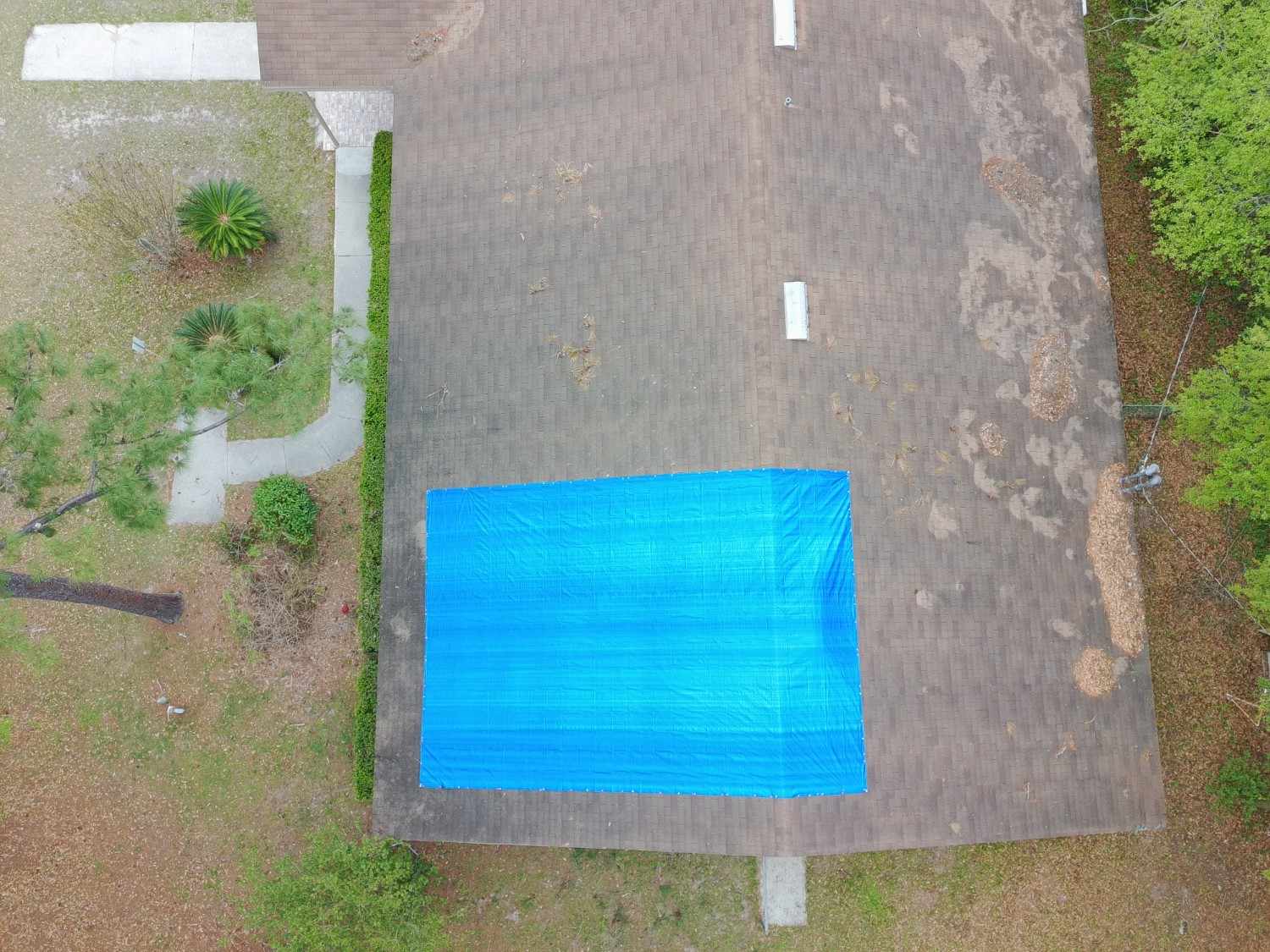
Don’t let it get worse while you wait. If the storm left your roof with a breach — missing sections, damaged areas where water is actively getting in — temporary protection is not optional. Water damage that accumulates while an insurance claim is being processed becomes a homeowner’s problem, not an insurer’s.
Professional emergency tarping prevents interior damage from compounding and is covered as a reasonable protective measure under most Florida policies. Document temporary work with photos and keep receipts. Storm Shield Exteriors provides emergency roof tarping for Palm Coast and surrounding Flagler County homeowners when immediate protection is needed.
One Warning: Watch for Unlicensed Contractors After Major Storms
After every significant hurricane, unlicensed contractors flood storm-affected areas with door-to-door pitches. Florida law requires a licensed roofing contractor (CCC license) for any roof repair or replacement — and unlicensed work voids your warranty, may not pass inspection, and creates liability that falls entirely on the homeowner.
Before you hire anyone:
- Ask for their Florida CCC license number and verify it at myfloridalicense.com
- Request a certificate of general liability insurance and workers’ compensation
- Get everything in writing before signing anything or paying a deposit
Reach Out To Palm Coast’s Storm Damage Specialists
Storm Shield Exteriors serves Palm Coast, Flagler Beach, Bunnell, Ormond Beach, Daytona Beach, St. Augustine, and surrounding Northeast Florida communities. Free storm damage inspections, adjuster meeting support, and emergency tarping when you need it.
When disaster strikes your home…